Fatherhood · The Fifth Programme · Built on Your Blueprint

What gets handed down isn’t the car. It’s the man.

What your child sees you do is the inheritance, and every father can hand it on, whatever is in the bank. Ten parts and 47 chapters, each rehearsed with James, then lived at home.

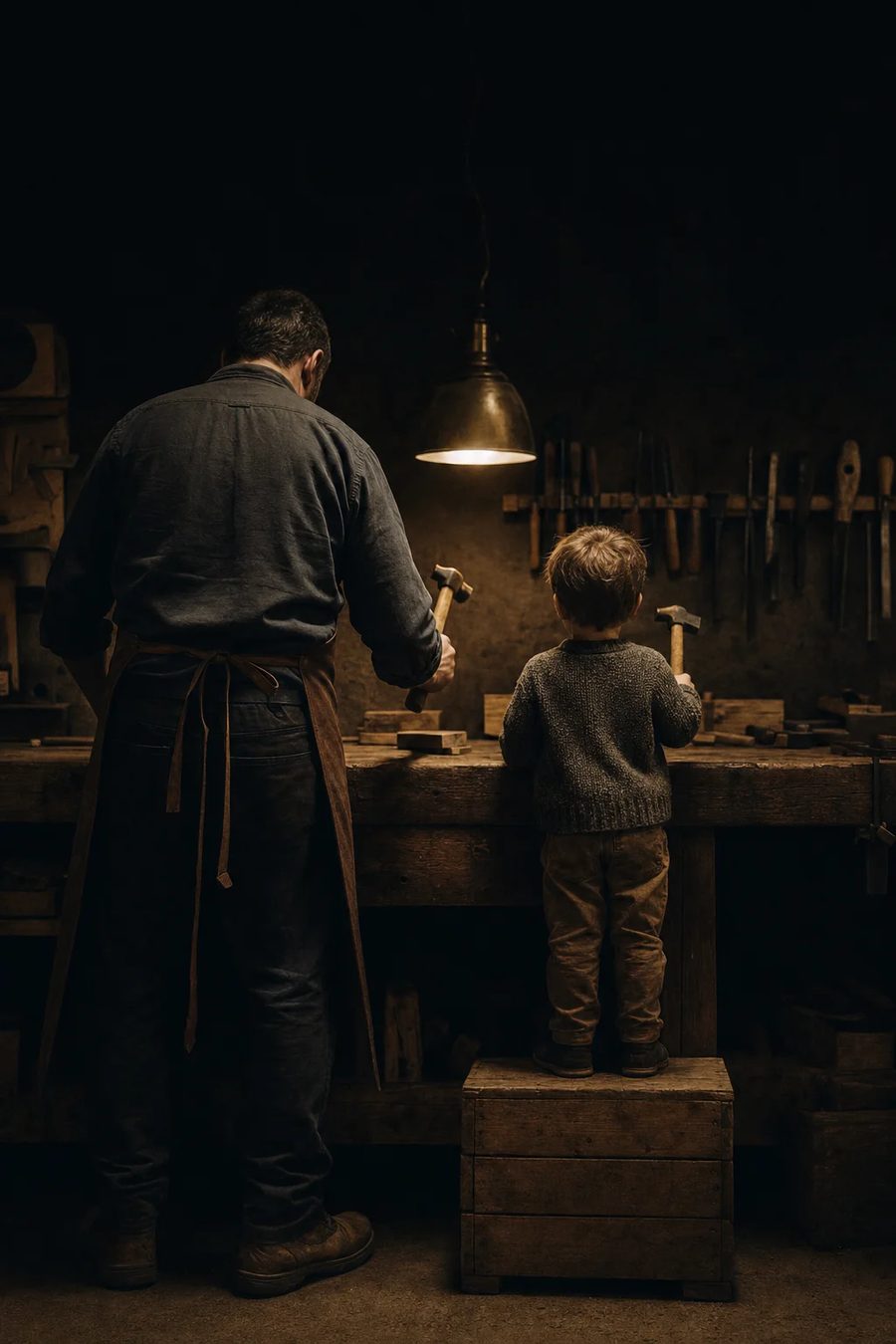
A man and a small child seen from behind at an oak workbench under one brass lamp, the child on a crate, holding a small hammer the way he holds his.
First you meet yourself (the Identity Blueprint). Then you learn to relate as him (Perfect Relationships). You take him into every room (Advanced Social Skills). You learn to lead (The Identifiable Leader). Then you turn all of it towards your child.
Is this you?

Every father was once a kid in somebody’s house.

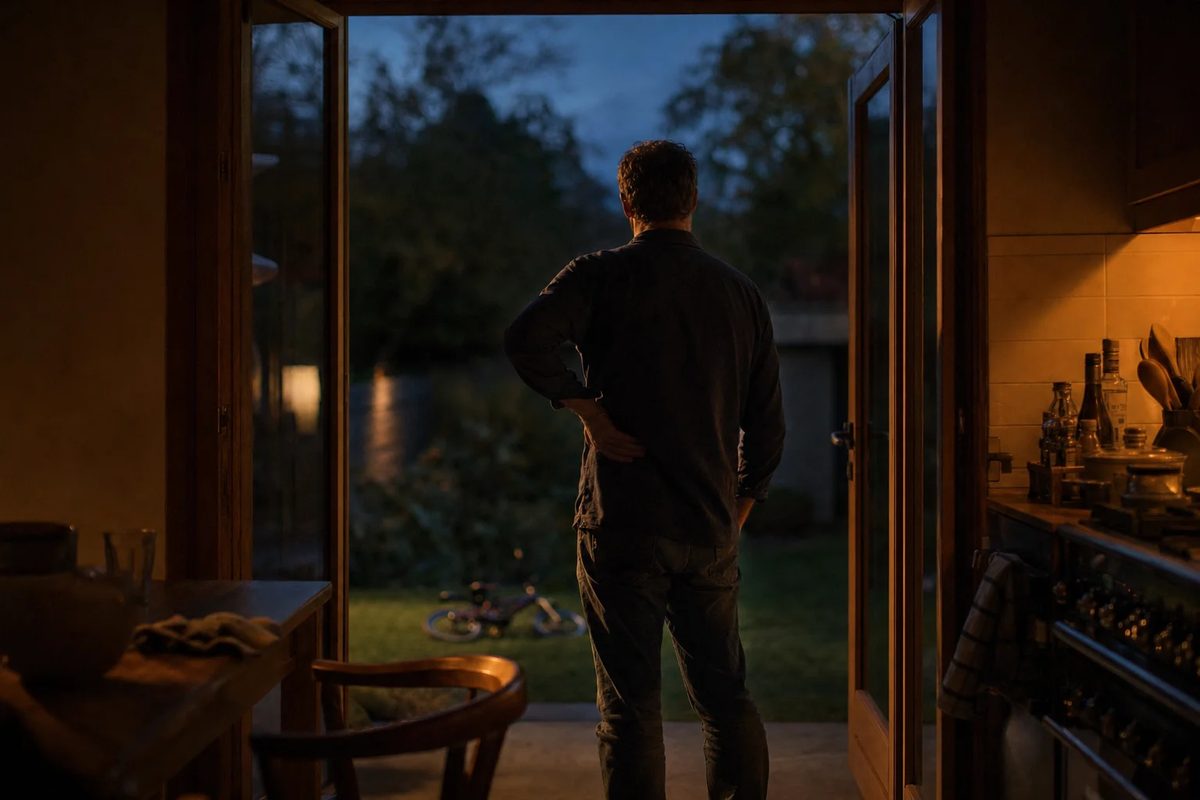
A man seen from behind in the open back doorway of a house at dusk, one hand on his hip, looking out at a garden where a small bike lies on the grass.
The patterns you don’t see are the ones you pass on.

Some got a great home. Some got an empty chair where a dad should have been. Whatever you got, it came with you.

“Were you born in a tent?”

You hear yourself say it, hand on your hip. That’s the moment you get to choose.


Before it, and with it

The milk goes over
Before“For goodness’ sake, be careful!”
With itYou breathe out, twice. “Grab the cloth. I’ll get the other one.”
“Watch me. Are you watching?”
Before“In a minute.”
With itYou turn your head, and you keep it turned.
The stuck zip
BeforeYou do it up. You’re late.
With it“Have a go. I’m here.” Then a slow count of ten.
You snapped
Before“I’m sorry, but you were winding me up.”
With it“I shouted at you before. I’m sorry.” No “but”.
“But Mum said I could.”
Before“Oh, go on then.”
With it“Let me talk it over with your mum, and we’ll get back to you.”
“I got a detention.”
Before“You what? Right, that’s your phone gone.”
With it“Thanks for telling me. What happened?”
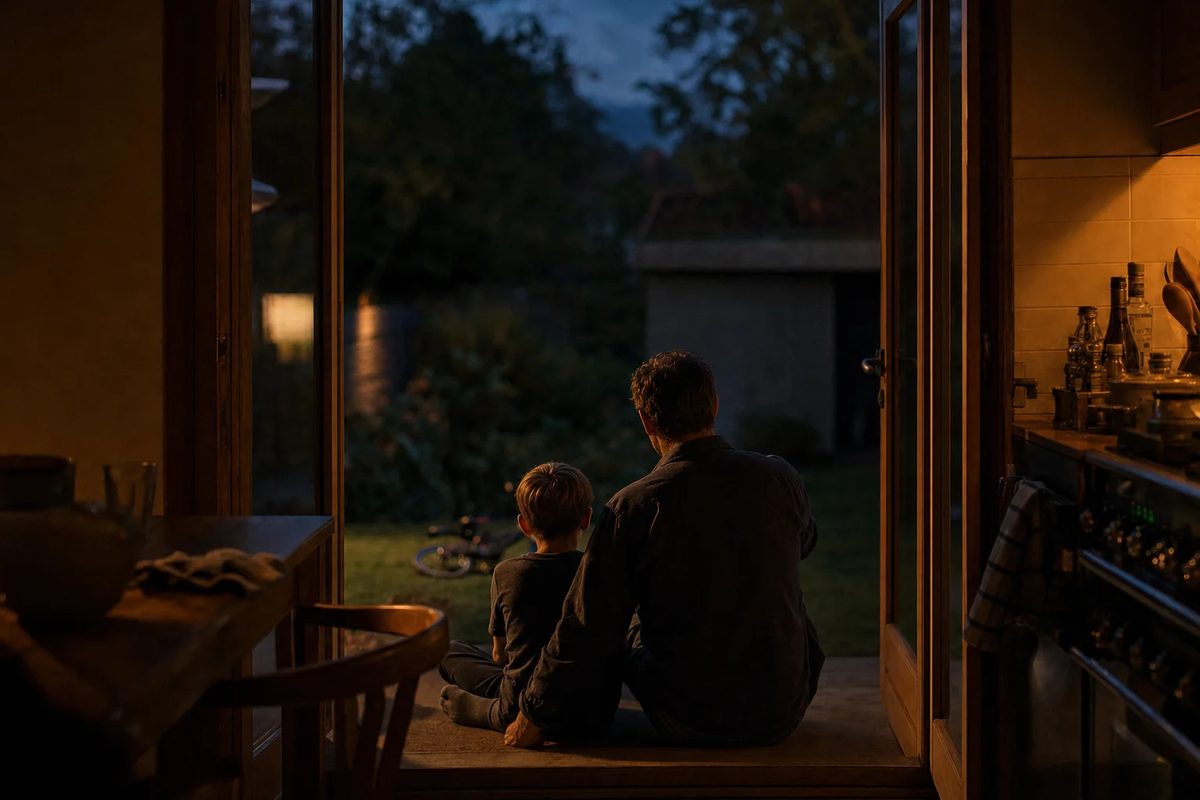
The same back door, later. The man sits on the step with a small child beside him, both seen from behind, the child wearing one shoe.
That’s you, choosing the pattern.

None of these is complicated. Together, they are a different household.


This is about you becoming the man your child needs.

There are plenty of books on getting a toddler to sleep or a teenager off the Xbox. Some of them are good. This is something else.

One large review of the research found the winning mix was simple to say.

  1. Warmth.The child knows they’re loved and wanted.
  2. Clear rules.The child knows where the edges are.
  3. Room to grow.The child gets to try, choose and do things for themselves.

None of it needs money, or a particular kind of family, or a father who lives in the same house every night. Anything a man does can be practised.


Ten parts. 47 chapters.

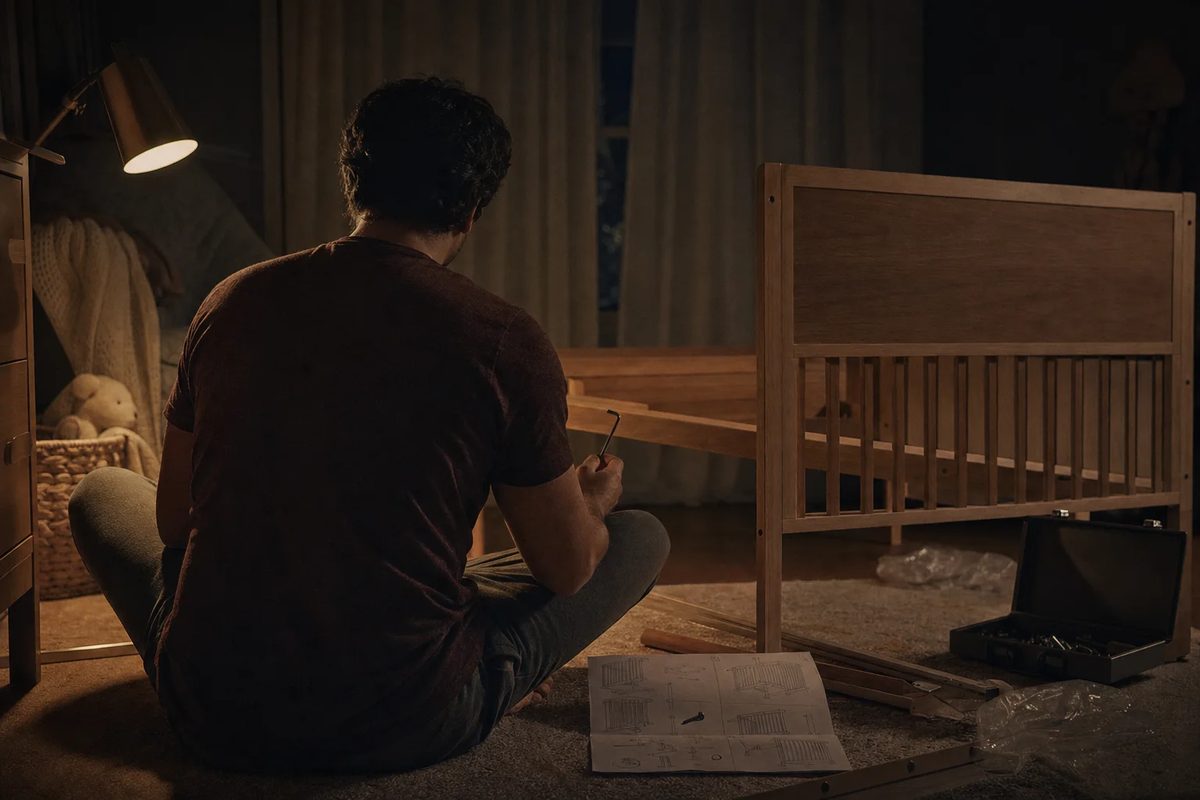
A man seen from behind, sitting on the floor of a dim room beside a half-built cot under one lamp, an Allen key in his hand and one screw left over.
Parts One and Two · Chapters 1–8

The Father

Fatherhood rarely arrives the way you pictured it. You start by saying, out loud, who you are becoming.

You’ll be able to
  • Know which way you lean: giving too little, or doing too much
  • Say what you’re keeping from your own story, and what stops with you
  • Catch love that overshoots: handing them all you went without
  • Get steady in ten seconds, before you answer

Most people who had it rough do not repeat it.

A kitchen at night, seen from behind. A man rests his hand on a woman's shoulder as she stirs a pan, steam rising in the lamplight.
Parts Three and Four · Chapters 9–17

The Two of You

The couple is the child’s foundation. Look after it first, and the child stands on something solid.

Together, apart, blended or on your own, every chapter works for you.

You’ll be able to
  • Let them see you disagree, and how it ends
  • Thank their mum for one specific thing, daily
  • Back their mum’s no, even if you’d have said yes
  • Turn three paragraphs about the past into two lines about next week
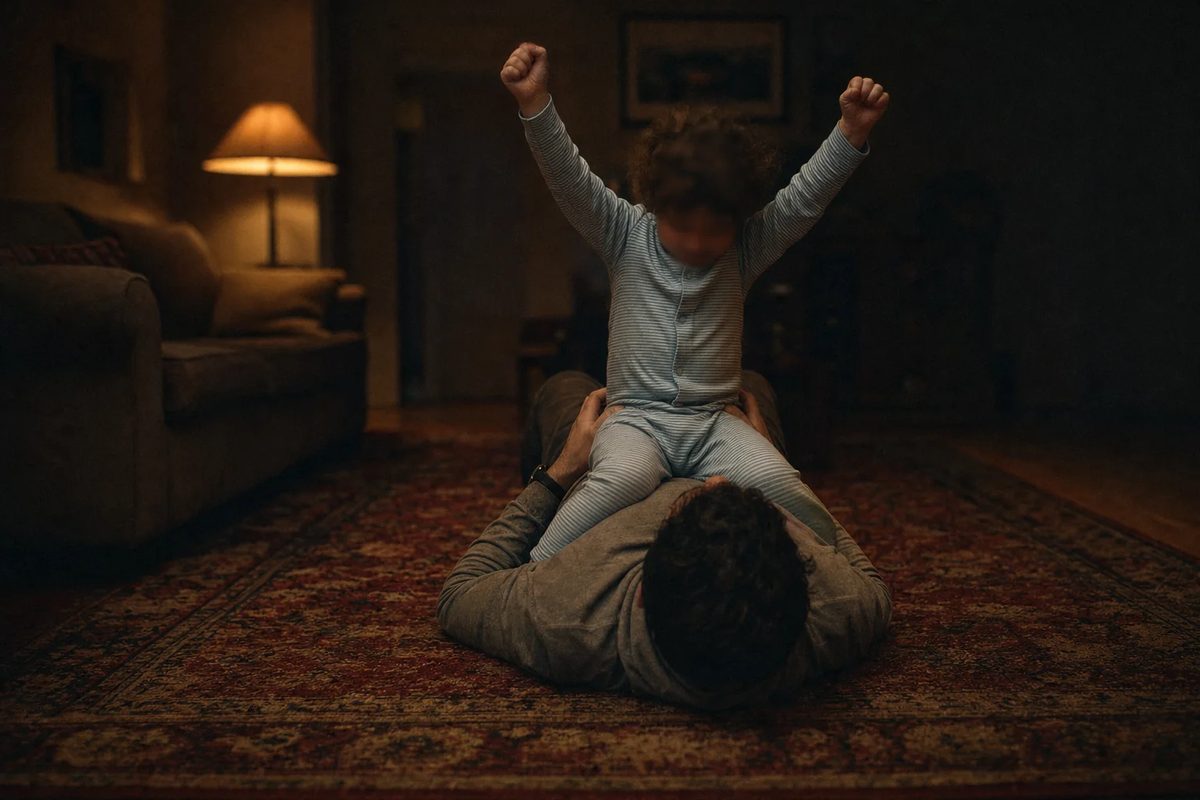
A lounge-room rug in lamplight, seen from above a man's shoulder as he lies flat on his back. A small child in soft focus sits on his chest with both arms raised.
Part Five · Chapters 18–22

The Safe Harbour

“Watch me” is a question a small child cannot yet put into words: am I worth turning your head for?

A child who knows the harbour is there goes out further and braver.

You’ll be able to
  • Return the serve, even a teenager’s grunt
  • Play rough, and stop the instant they say stop
  • Say sorry to a child, with no “but”
  • Give them five minutes with nothing else in it
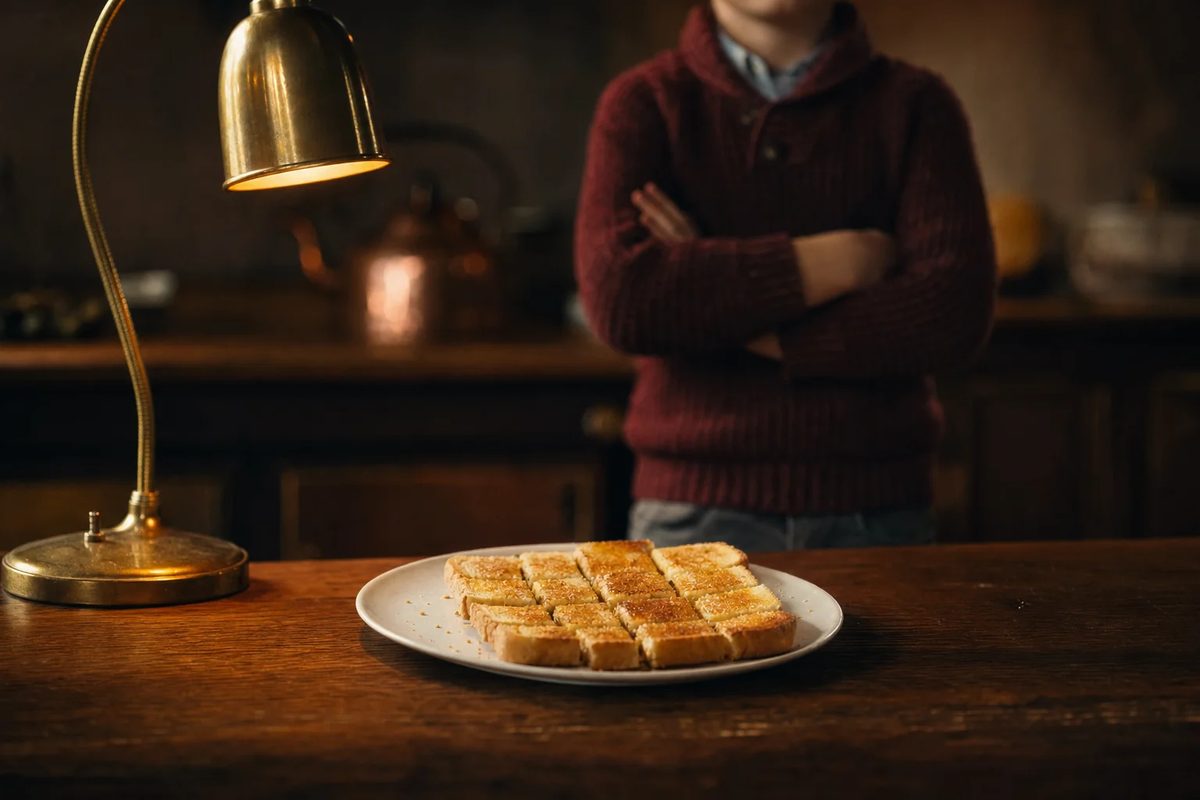
A plate of toast cut into squares on a dark oak worktop under a brass lamp. Beyond it, in soft focus, a small child with folded arms.
Parts Six and Seven · Chapters 23–32

Feelings Coached, Warm and Firm

You cut the toast into squares when they wanted triangles. You can’t un-cut toast. You sit with them and say, “You really wanted triangles,” and somehow that’s what fixes it.

You’ll be able to
  • Catch a feeling at the scowl, before the slammed door
  • Say to a fear, “I know this feels scary. And I know you can handle it.”
  • Hold a rule, then go straight back to being warm
  • Call a pause with a teenager, and come back, both of you
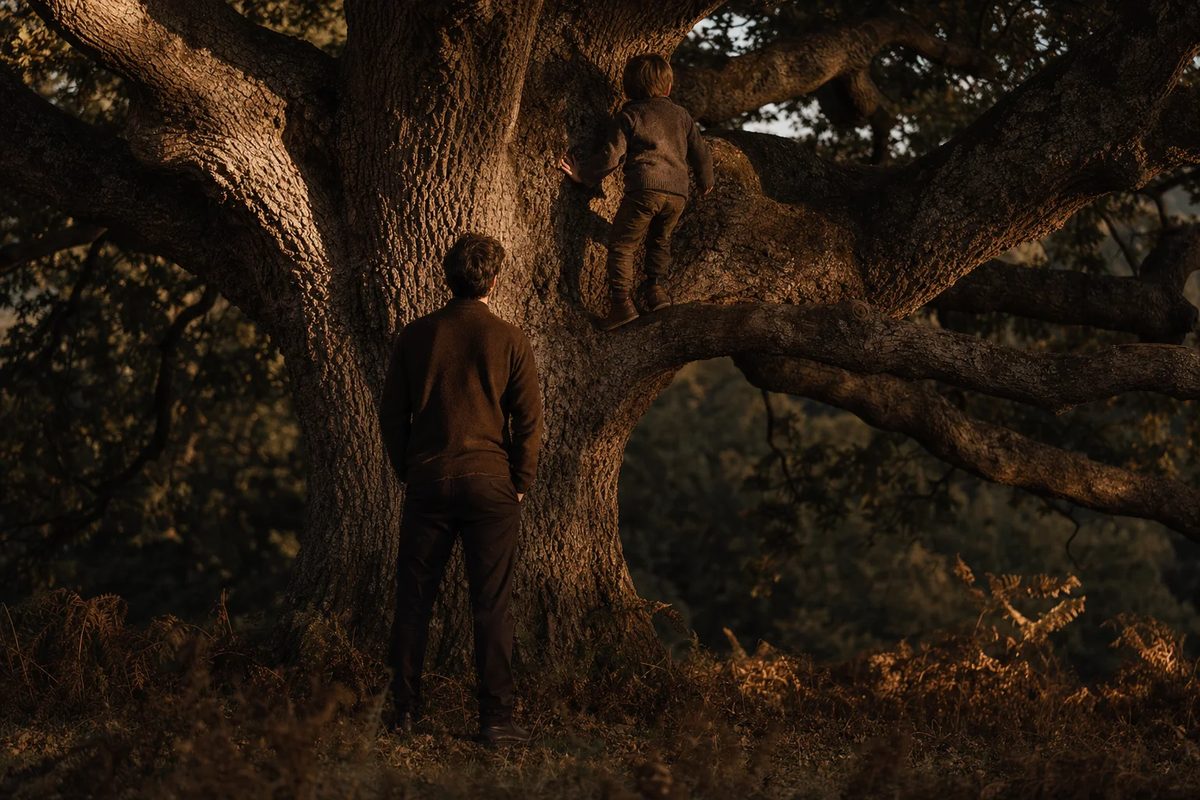
A child seen from behind, halfway up an old oak in low gold light. At the foot of the tree, a man seen from behind with his hands in his pockets.
Parts Eight and Nine · Chapters 33–40

Room to Be Themselves, Who They’re Becoming

The word confidence comes from the Latin for trust. A child gets it by being trusted with something, and finding out they can do it.

You’ll be able to
  • Count a slow ten before you step in
  • Swap “Be careful!” for “Where’s your foot going next?”
  • Hand over a real job as an honour, hands off
  • Go first at dinner with what you got wrong

There is no story a child enjoys more than their father being an idiot.

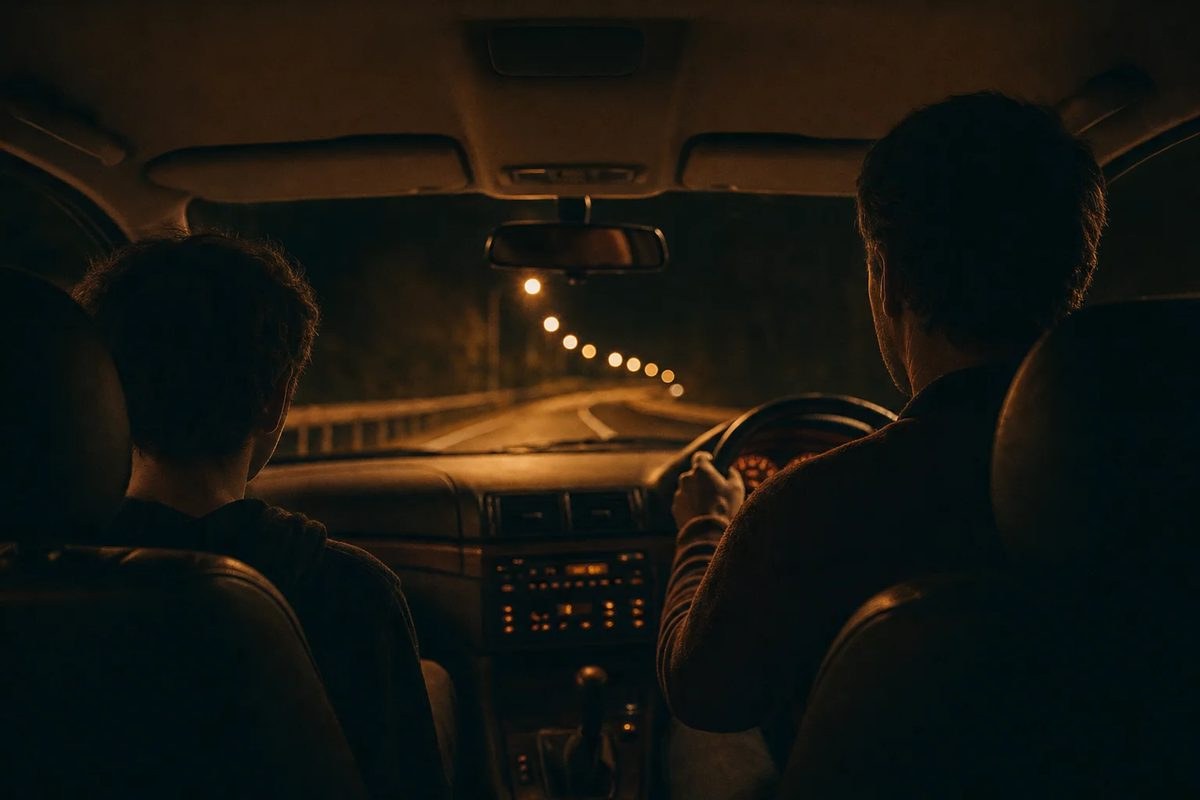
From the back seat of a car at night, a father driving and a teenager beside him, both seen from behind, amber street lamps ahead on a winding road.
Part Ten and the Close · Chapters 41–47

Holding Their Ground

One day your child will be somewhere you’re not, facing a choice you’d rather they didn’t have to make. This part gives them ground to stand on.

Then the eleven Moments That Matter, from puberty to a first heartbreak. James opens the one you need, when you need it.

You’ll be able to
  • Say “Thanks for telling me” first
  • Take the scenic route home, saying very little
  • Agree a code text: you come, no questions that night
  • Tell a step-child, “You don’t have to choose.”

James is with you the whole way. You carry the accountability.

After the chapters on you, your child’s age decides what James opens next. Every chapter, the same five steps.

  1. Learn it.The idea, in plain words.
  2. Own it.Honest questions about your house, and the one you grew up in.
  3. Rehearse it.With James first. Sometimes he plays your child.
  4. Live it.You try it at home, for real.
  5. Embed it.Tell James what your child did next.

One thing, done properly, in real life. That’s what changes a household.


What it isn’t

It isn’t about managing kids, and it won’t turn you into a sergeant major or a pushover. It doesn’t ask for a perfect father either.

One line takes the pressure off:

A father who repairs well is worth more than a father who never slips, mostly because the second one doesn’t exist.

There’s a chapter on that. It might be the most useful one in here.


One person sees all of it, and is taking notes the whole time.

A small stone harbour at dusk, lamps lit along the quay, and one small boat heading out past the harbour light.
You won’t be there. What you’ve built will be.

A child raised with warmth and clear rules knows exactly where the edges are, and knows the whole time that they are loved.

They can say what they feel, so they don’t have to act it out. They can tell you the worst of it and be thanked, and they have seen, every day, what strength is for.

Years on, another back door in evening light. A young woman seen from behind, one hand on the frame, and a small child in soft focus on the path outside.
They will breathe out, twice, without knowing where they learned it.

What does your child’s face look like when you walk in the door?

In Part One you answer that for James: a date some years off, described as if it’s already true. At the close he reads it back, and you mark every line that’s already starting to be true.

It opens with James once The Identifiable Leader is complete.

AUD $1,497
  • All ten parts, 47 chapters and the eleven Moments That Matter, with James.
  • Nothing is added at payment.

Not in the work yet? It starts with the Identity Blueprint.

Start with the Identity Blueprint

The programme’s last lines:

“That is the inheritance. It was never the car. Go and pick them up.”

Control Yourself · Master Your Patterns · Find Freedom · Earn Peace.